Curvahedra
A modular construction system to explore the geometry of curvature.
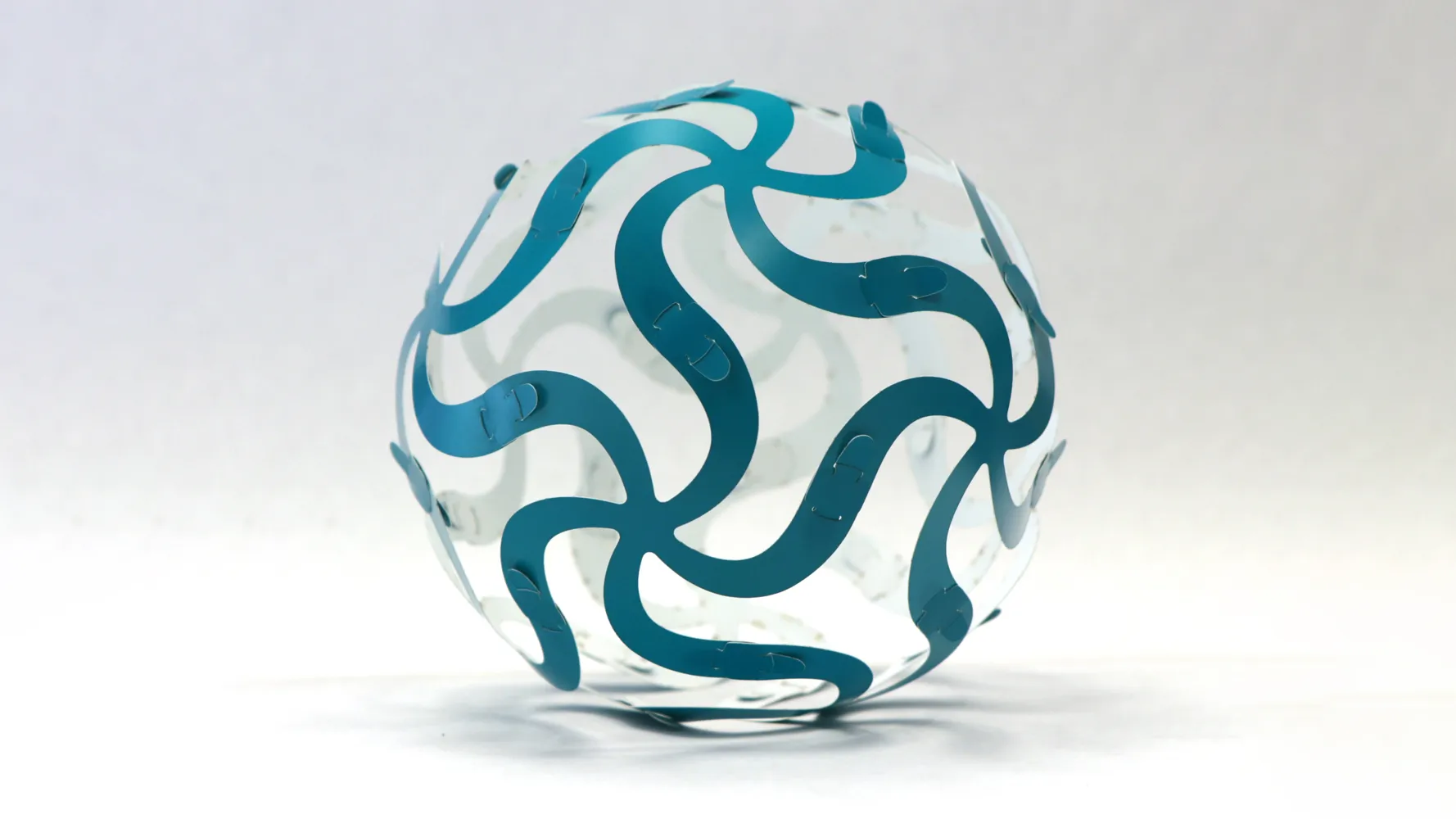
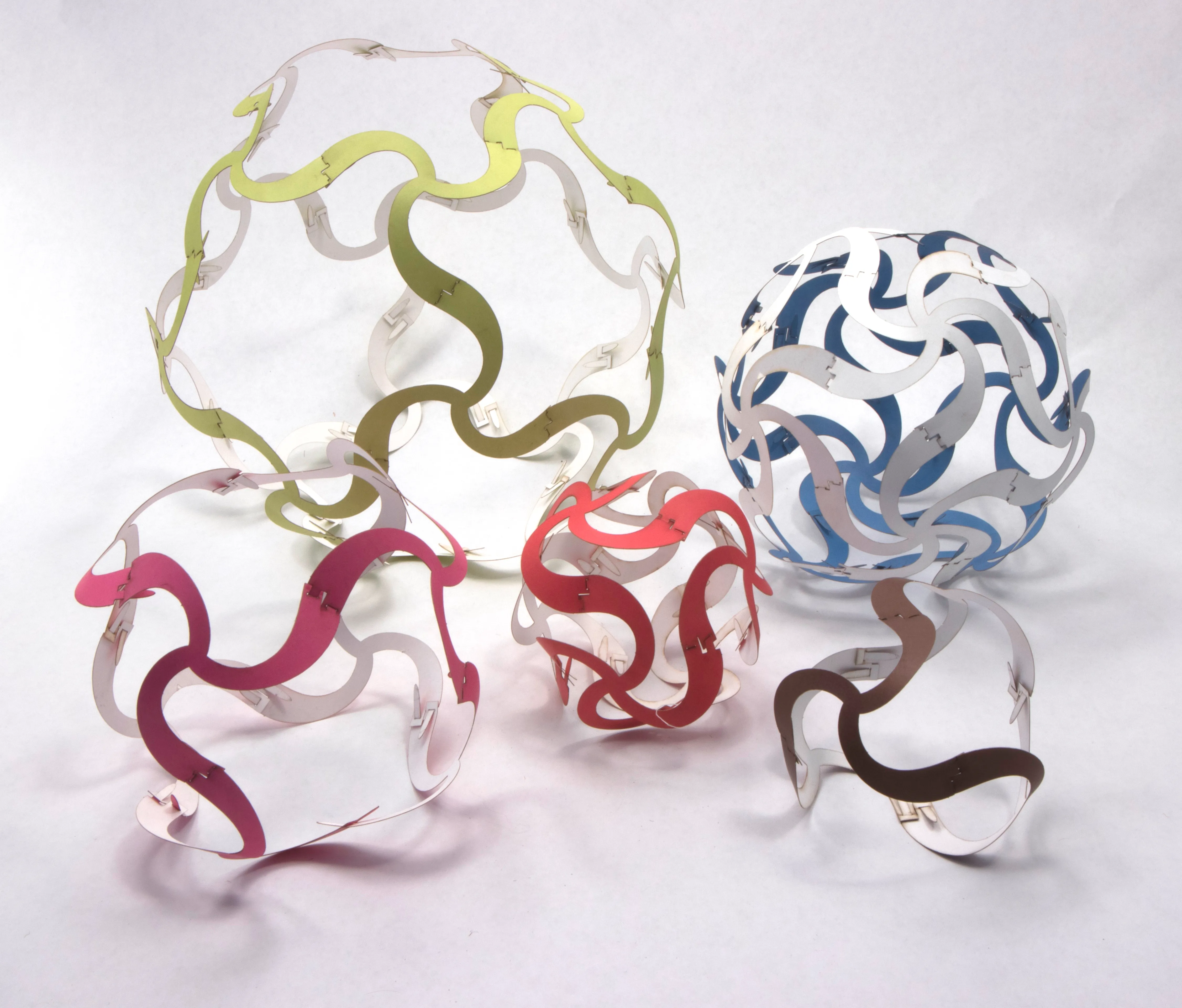
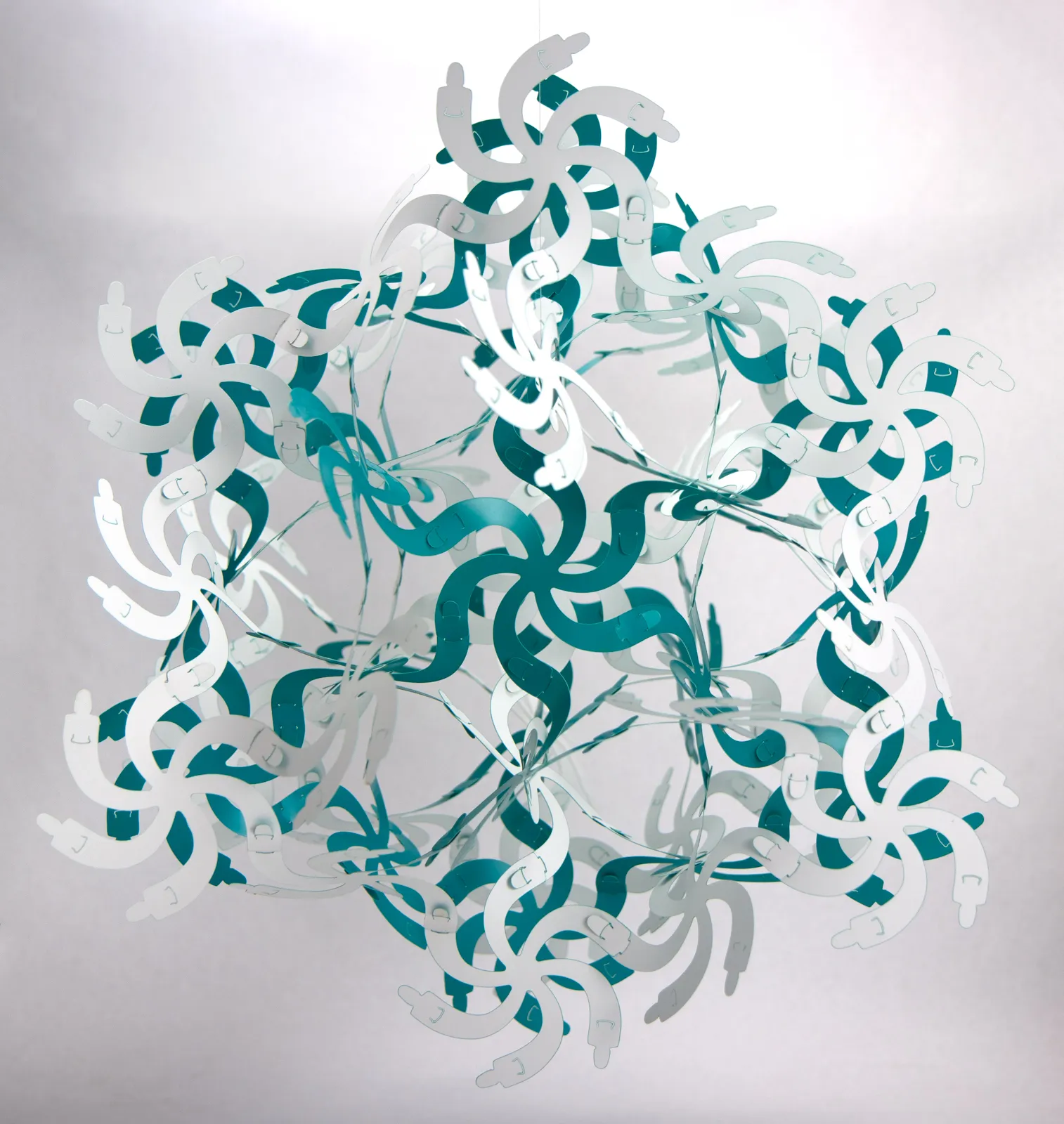
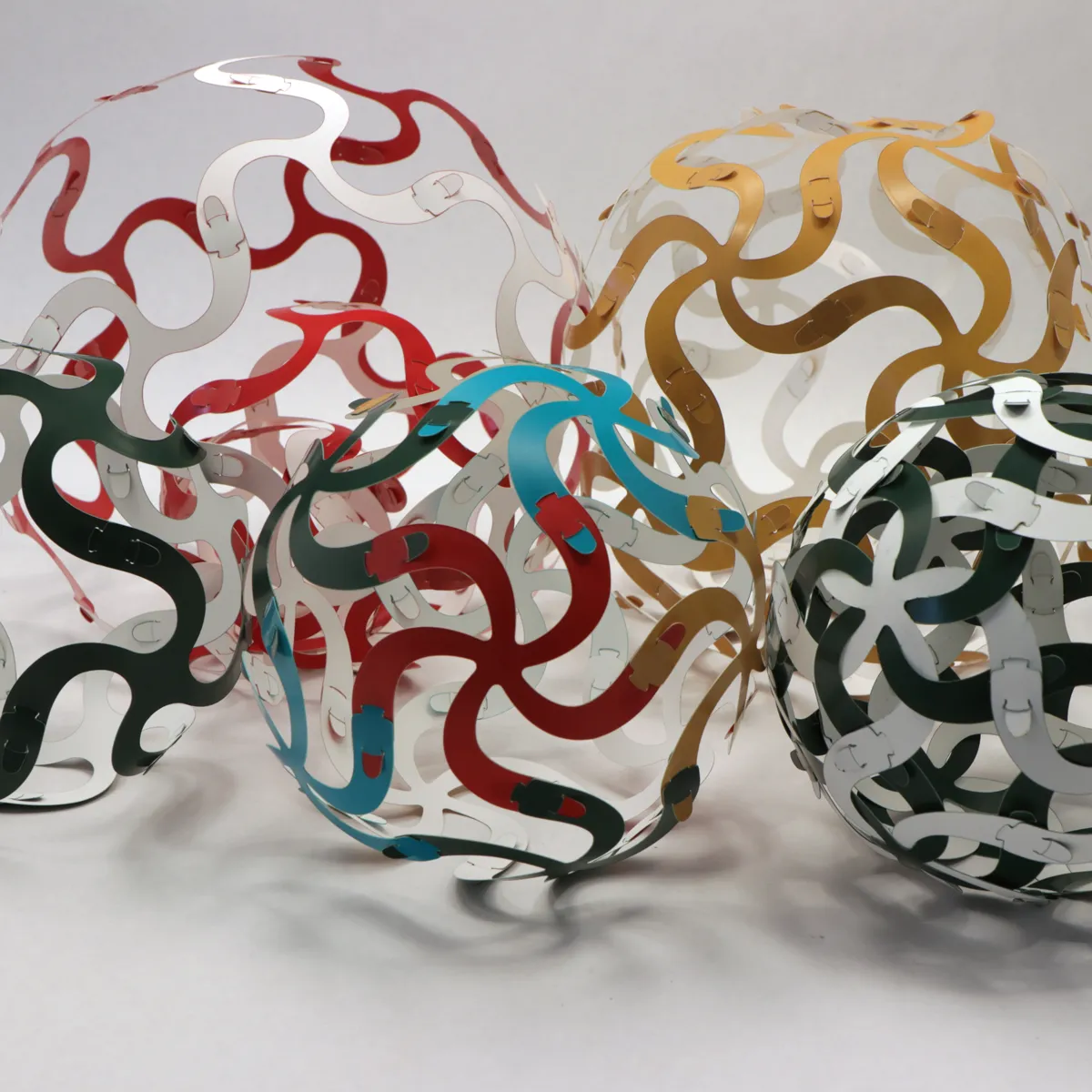
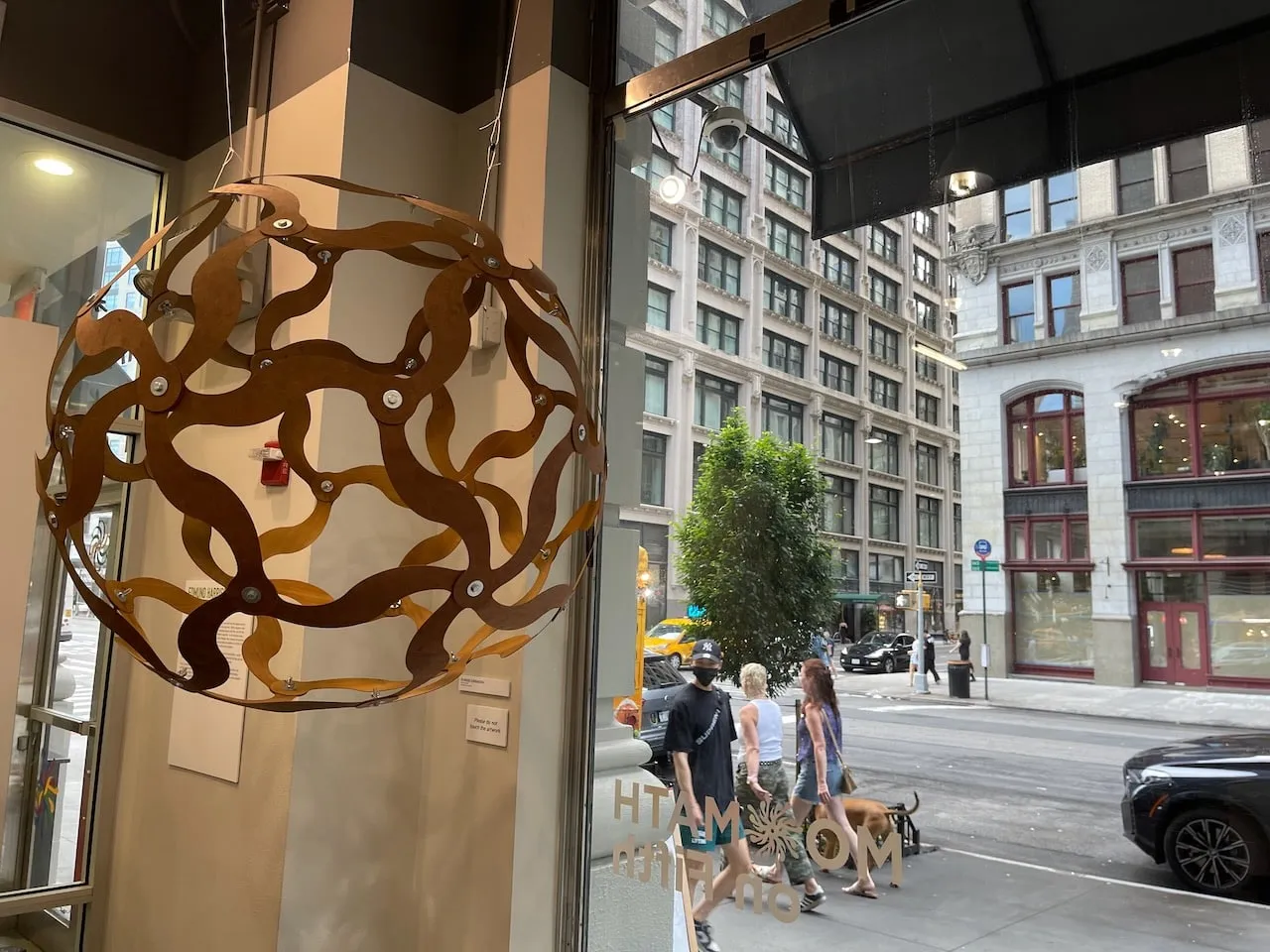
Curvahedra is a construction system of branched pieces that hook together to build curved surfaces. It began as an exploration of how to make non-flat things on the lasercutter, but evolved into a toy that explores the geometry of curvature.
A triangle that refuses to lie flat
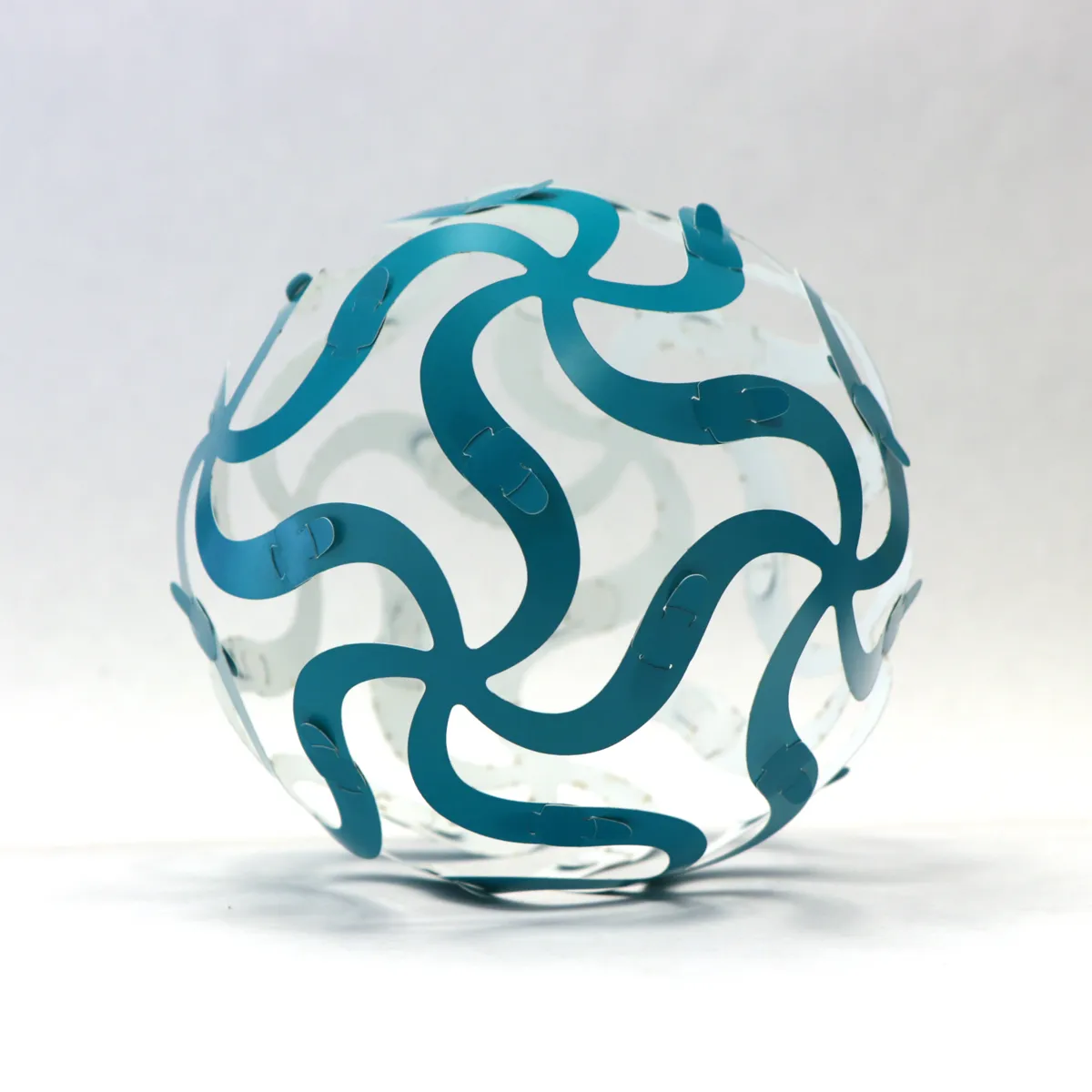
Hook three five branch pieces into a loop and you make a sort of triangle. Look at the corners: each is one fifth of a full turn, so . Three of them total , not the that every flat triangle obeys. Something has to give, and what gives is flatness. The triangle bulges. Add more such triangles and the bulge deepens until the surface closes up into a sphere.
That excess angle is the whole point. The relationship between how much you turn going around a loop and how the surface curves inside it is the Gauss-Bonnet theorem, one of the most elegant results in mathematics (written in radians not degrees):
The symbols are there to make a very intuitive idea precise. The first term measures the total curvature of a region; the second measures the total turning around its boundary. For the simple loops we build, the two must add up to . Too much turning and the region is saddle shaped; too little and it bows out like a sphere. Curvahedra lets you feel that trade off with your fingers.
Sphere, plane, saddle
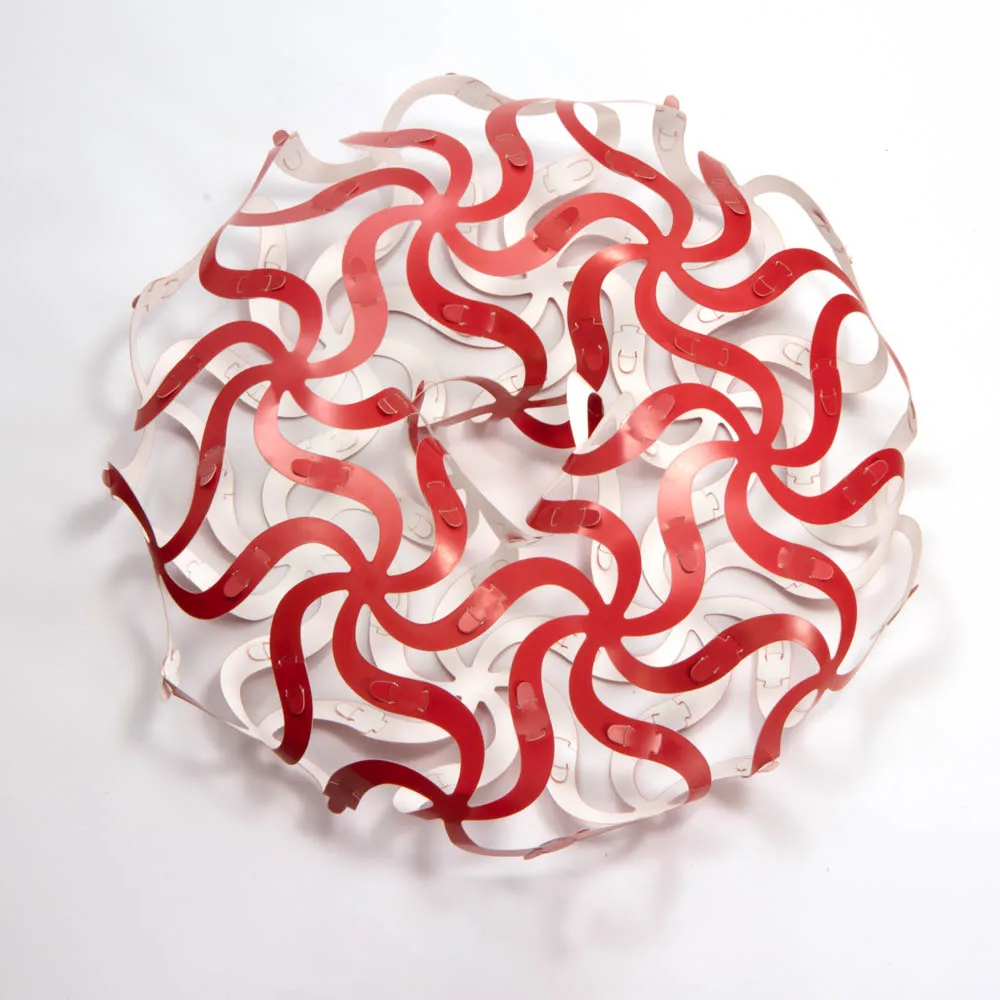
Stay with equilateral triangles and vary the corner angle. At the turning is exactly and the surface is flat. Above that it curves positively, into pieces of a sphere. Below it the surface curves negatively, into saddles, and you can keep adding pieces forever to build a hyperbolic plane that ruffles like kale.
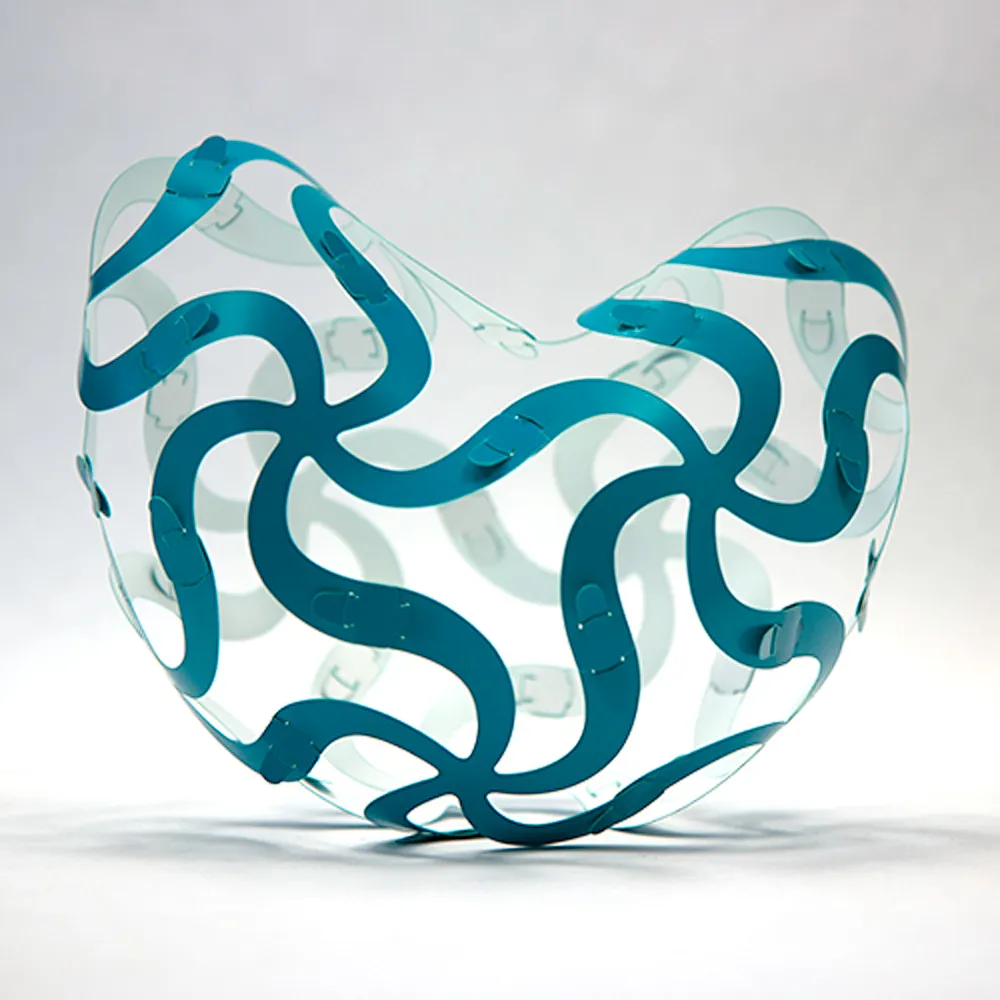
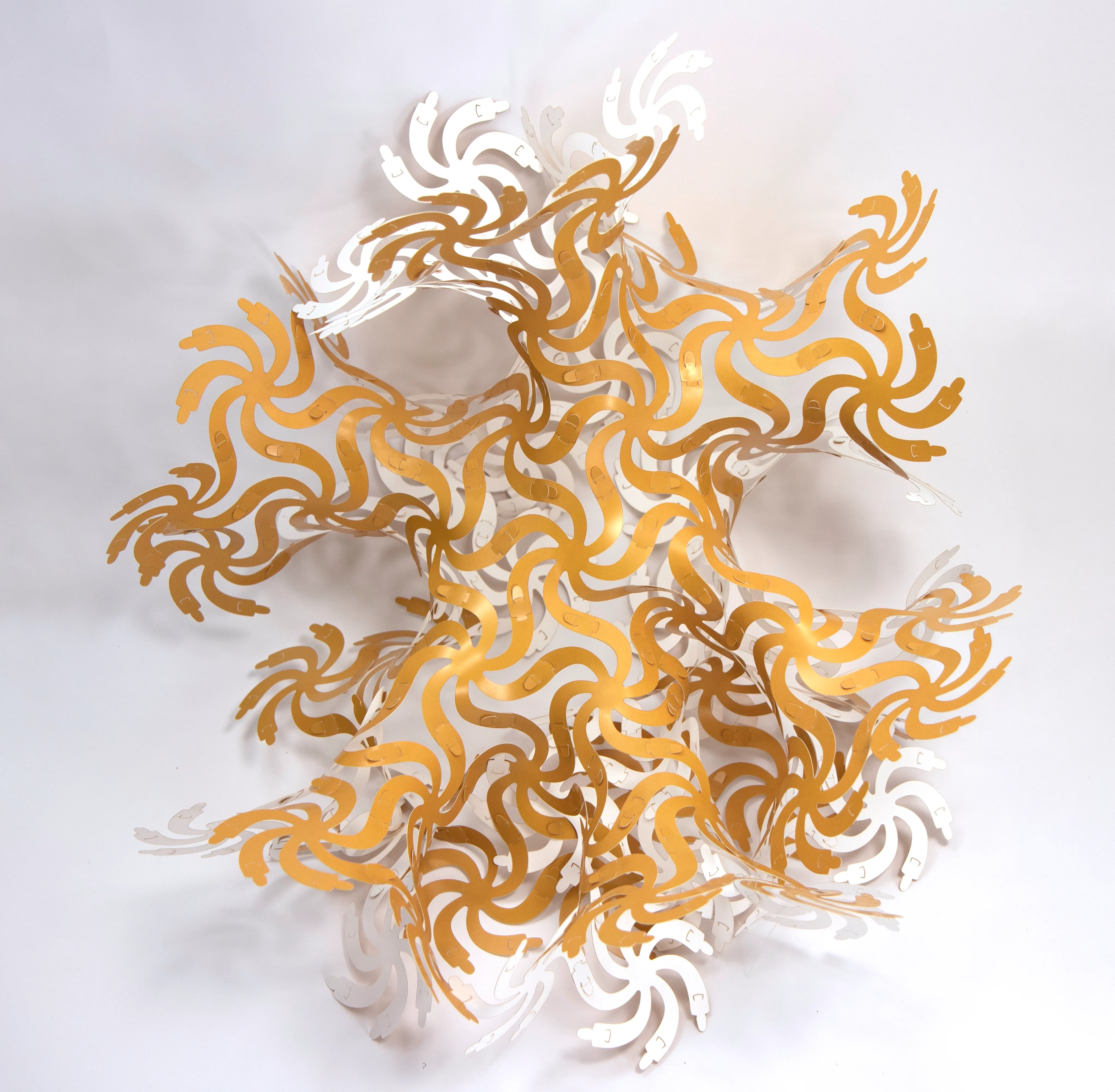
Because curvature can be positive in one place and negative in another, the system becomes a medium for sculpture. Balance the two and you can make a surface whose loops all enclose zero total curvature yet which cannot lie flat, or close everything up into a torus.
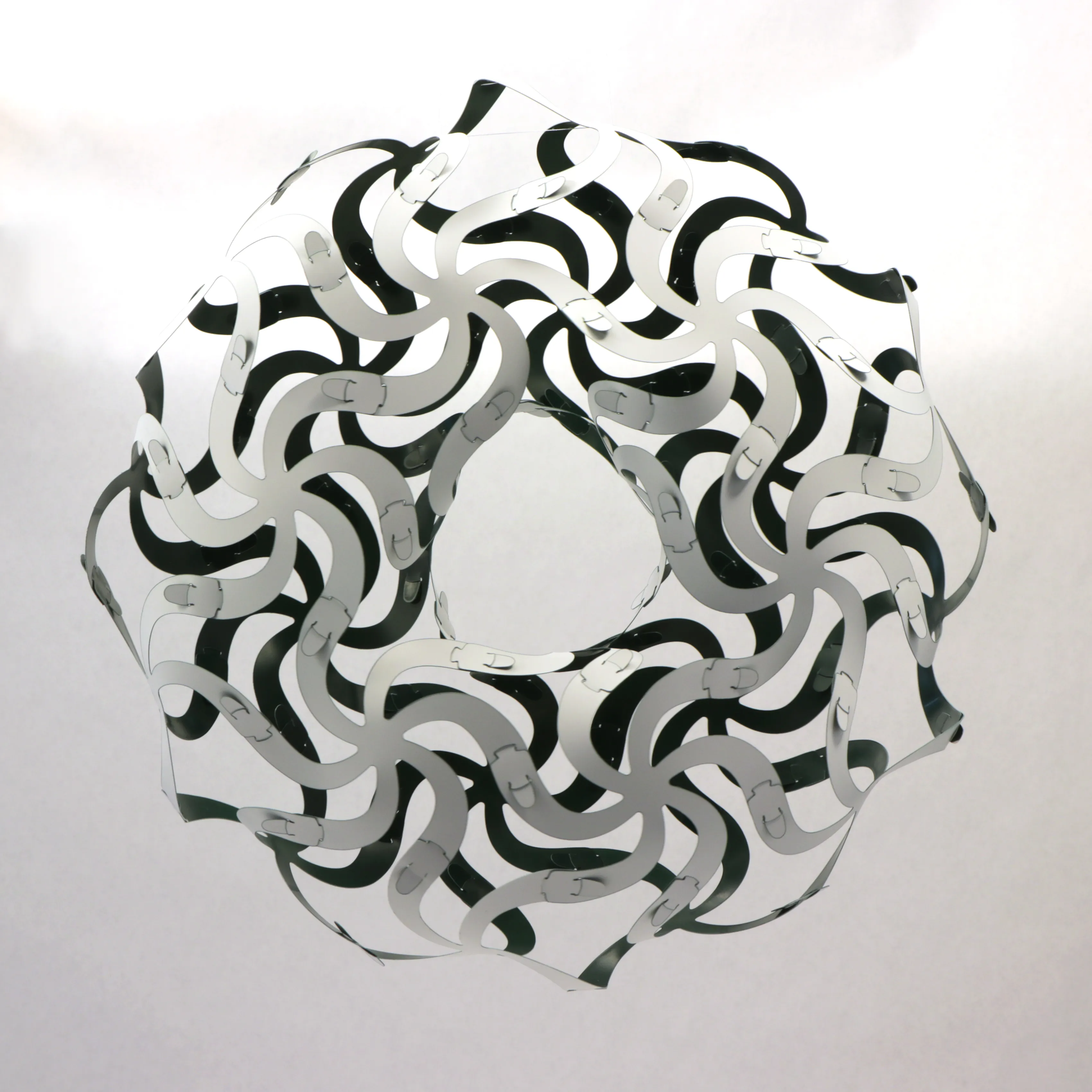
From paper to metal
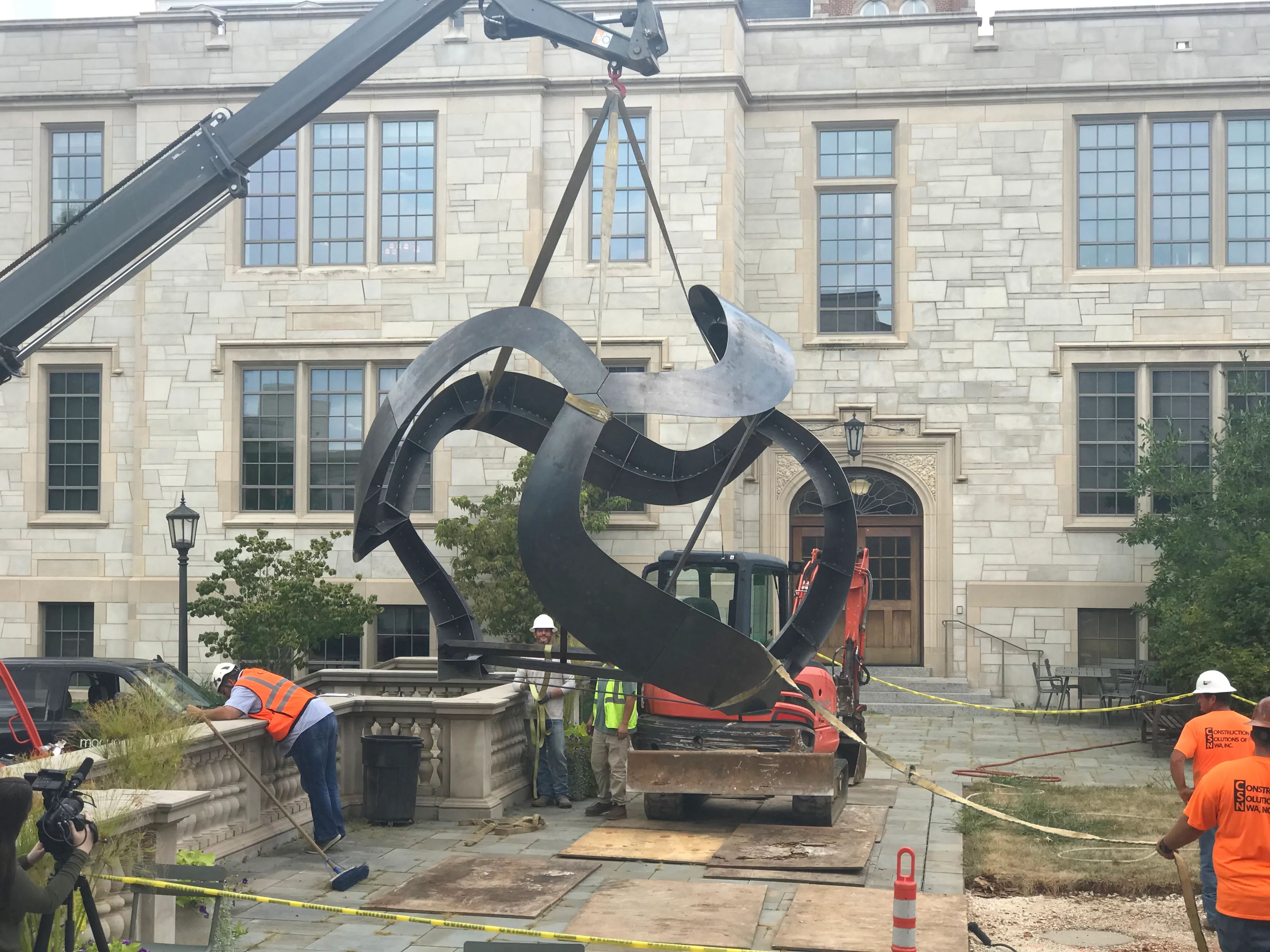
The same idea scales. Paper and mylar bend easily, so they make loops on their own. Sheet metal does not cooperate: start to bend a steel rod and it weakens where it bends, so all the bending crowds into one kink instead of spreading smoothly. Gauss-Bonnet offers a way around this. Build a loop from several rigid pieces joined loosely, then slowly tighten the joints. The force travels in the plane of the surface, which does not want to bend, and so distributes itself evenly. Smooth, controlled curves emerge with nothing more than a wrench.
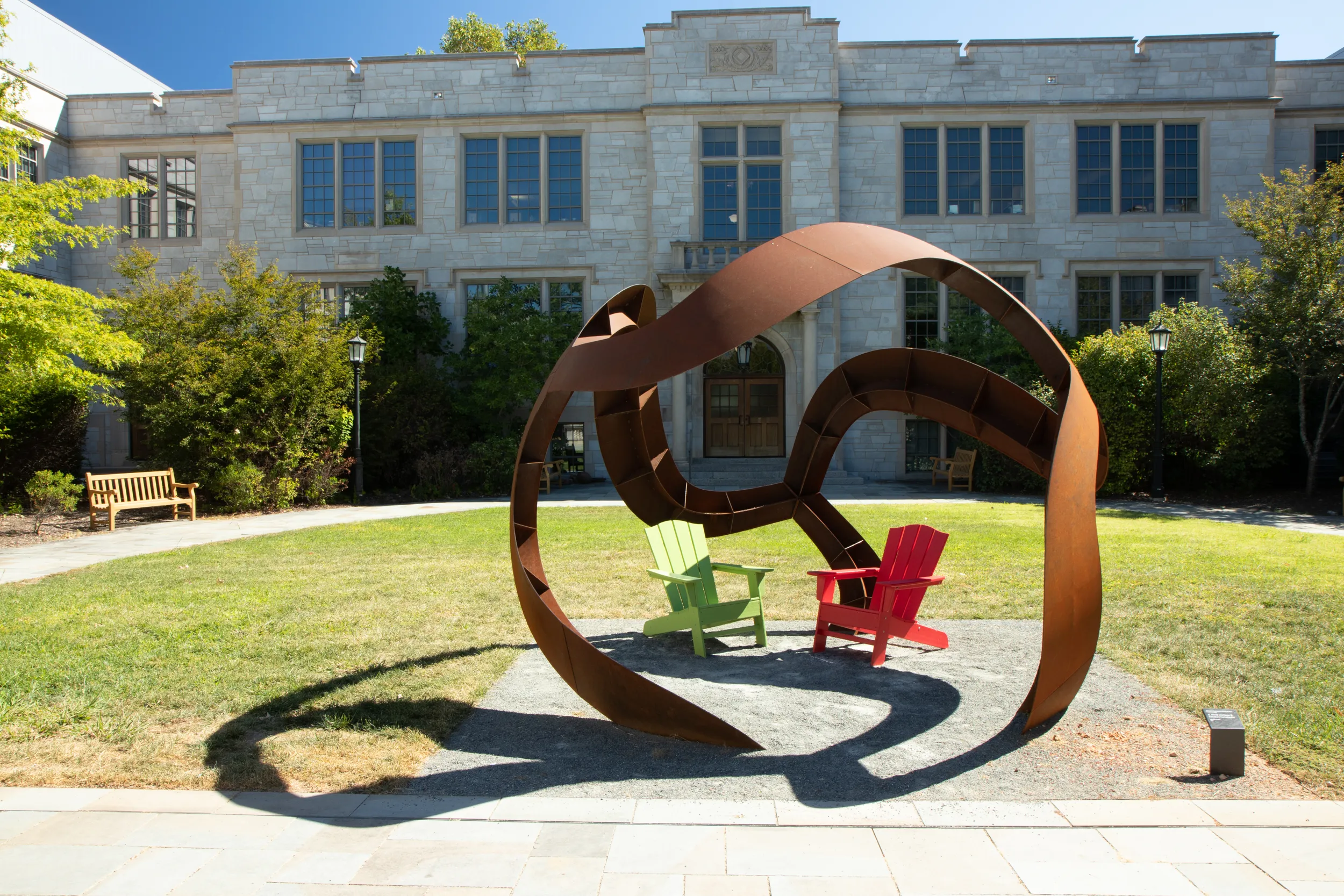
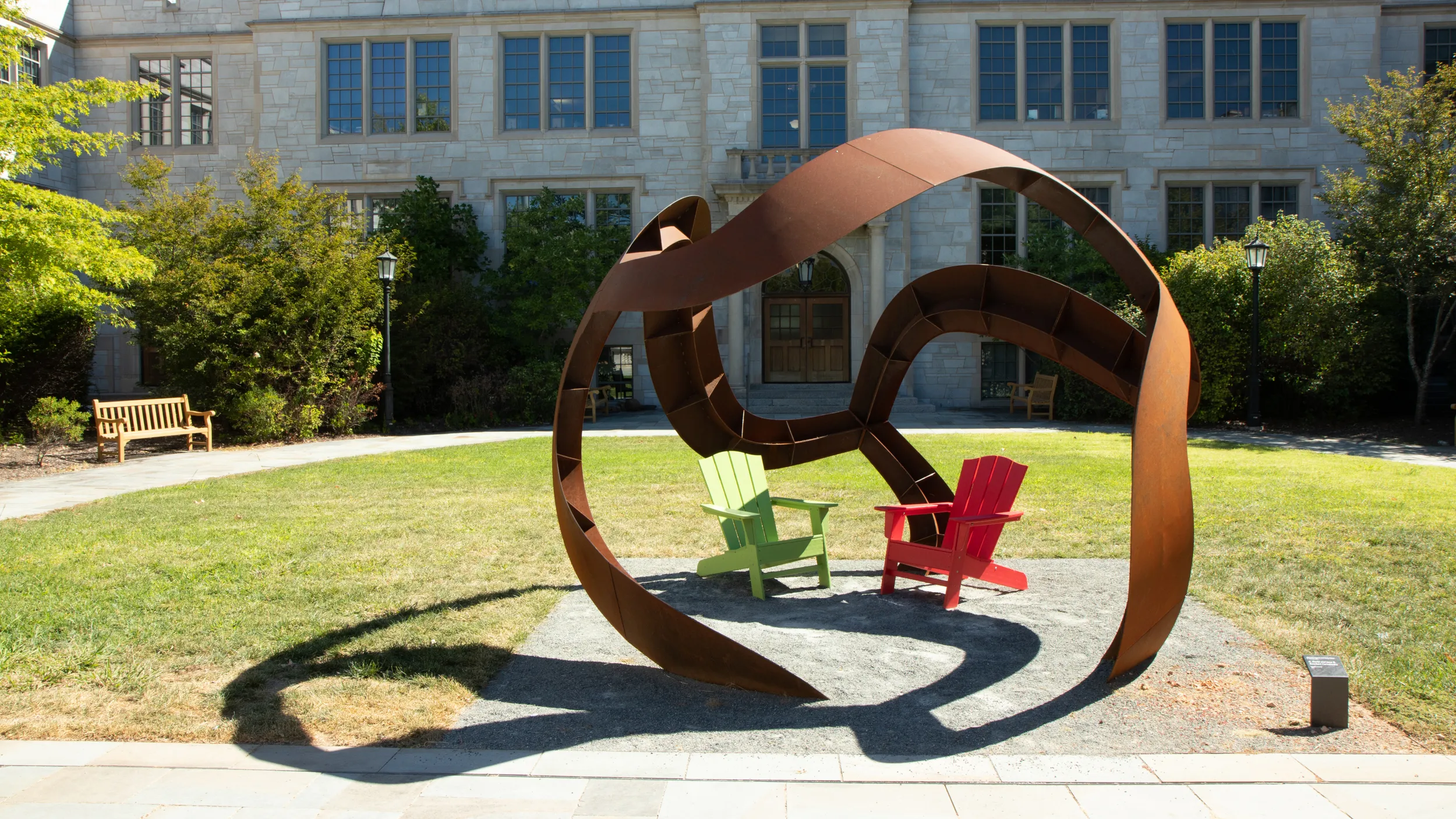
This is the principle behind the Zip-Form fabrication system, developed with architect Emily Baker, and behind the Gearhart Hall Courtyard Curvahedra. The deeper mathematical background is laid out in Gauss-Bonnet Sculpting.
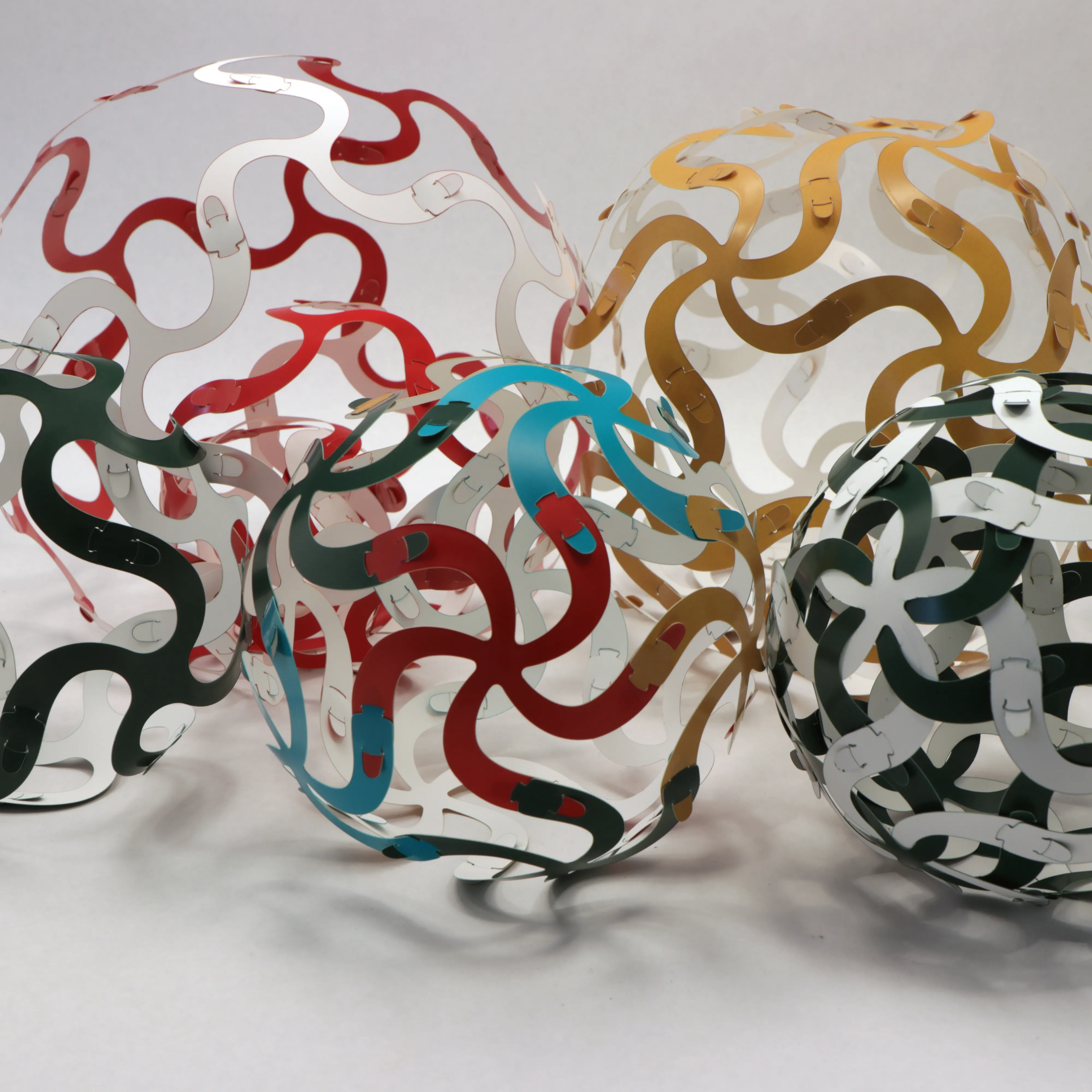
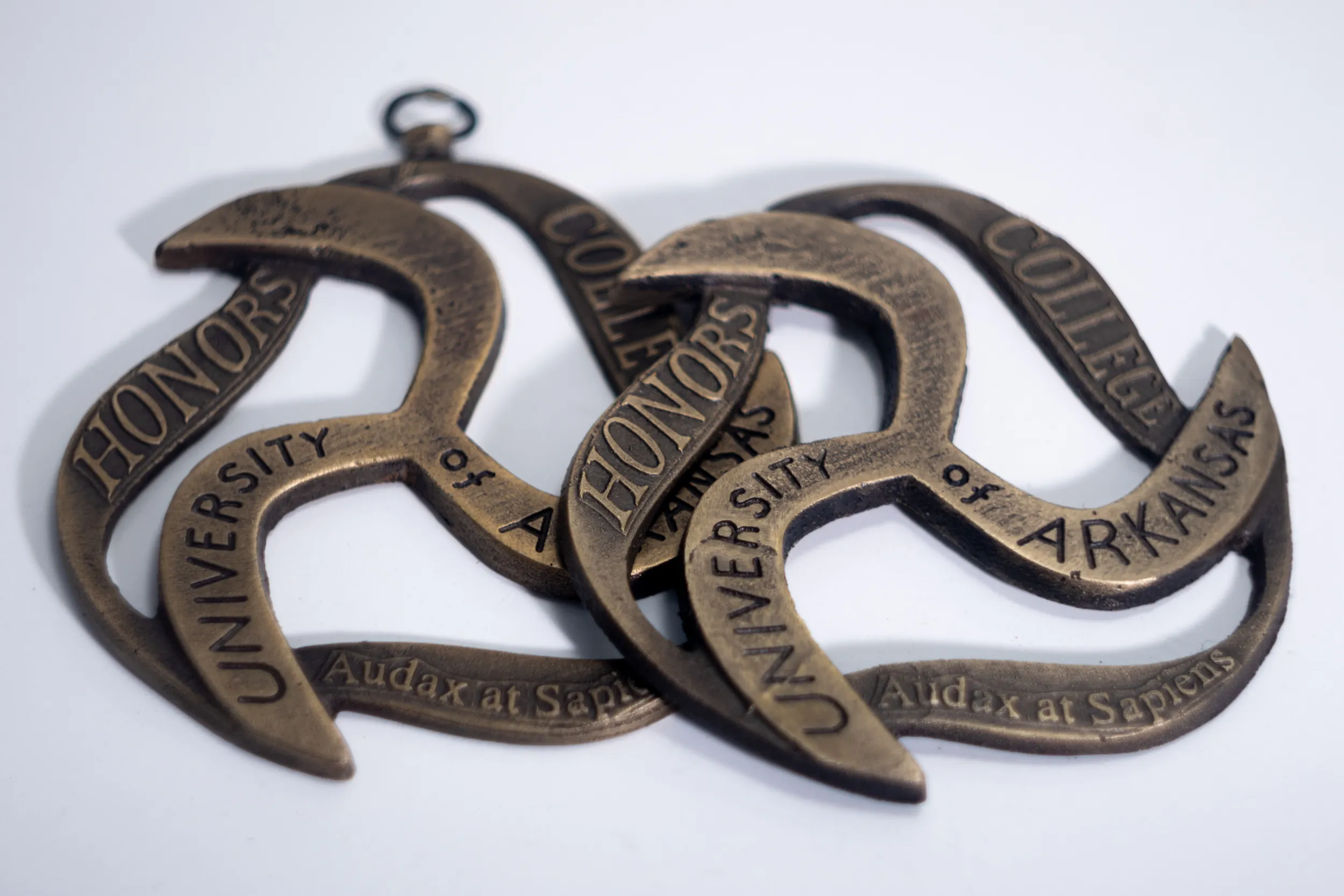
Curvahedra has run as a Kickstarter and a small business, become a medal and a website, and grown from a teaching toy into metal sculpture. Through all of it the aim has stayed the same: to take a result usually reserved for the final year of a mathematics degree and let anyone reach it by building, breaking, and rebuilding a surface in their own hands.
Coverage: The Guardian — Amazeballs! Geometrical system makes stunning spheres from swirly stars (2016) · Forbes — Three Math Kickstarters for Your Perusal (2016) · The Aperiodical — Curvahedra is a construction system for arty mathsy structures (2016) · University of Arkansas News — international exhibition and lecture overseas (Imperial Lates: Xmaths, 2018) · The Aperiodical — Curvahedra Geometry (2018)