Tilings, substitutions and Projection
Research into the relationship between substitution rules and projection tilings.
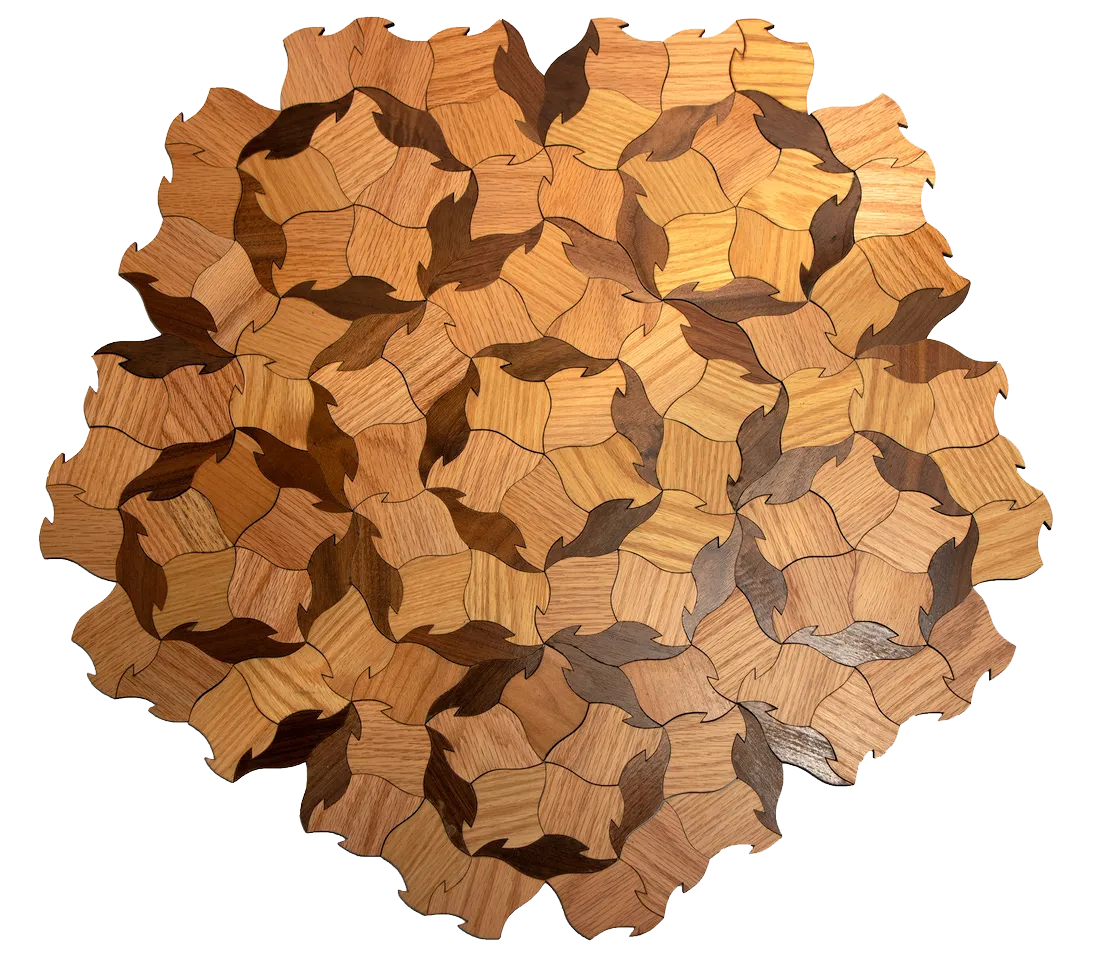
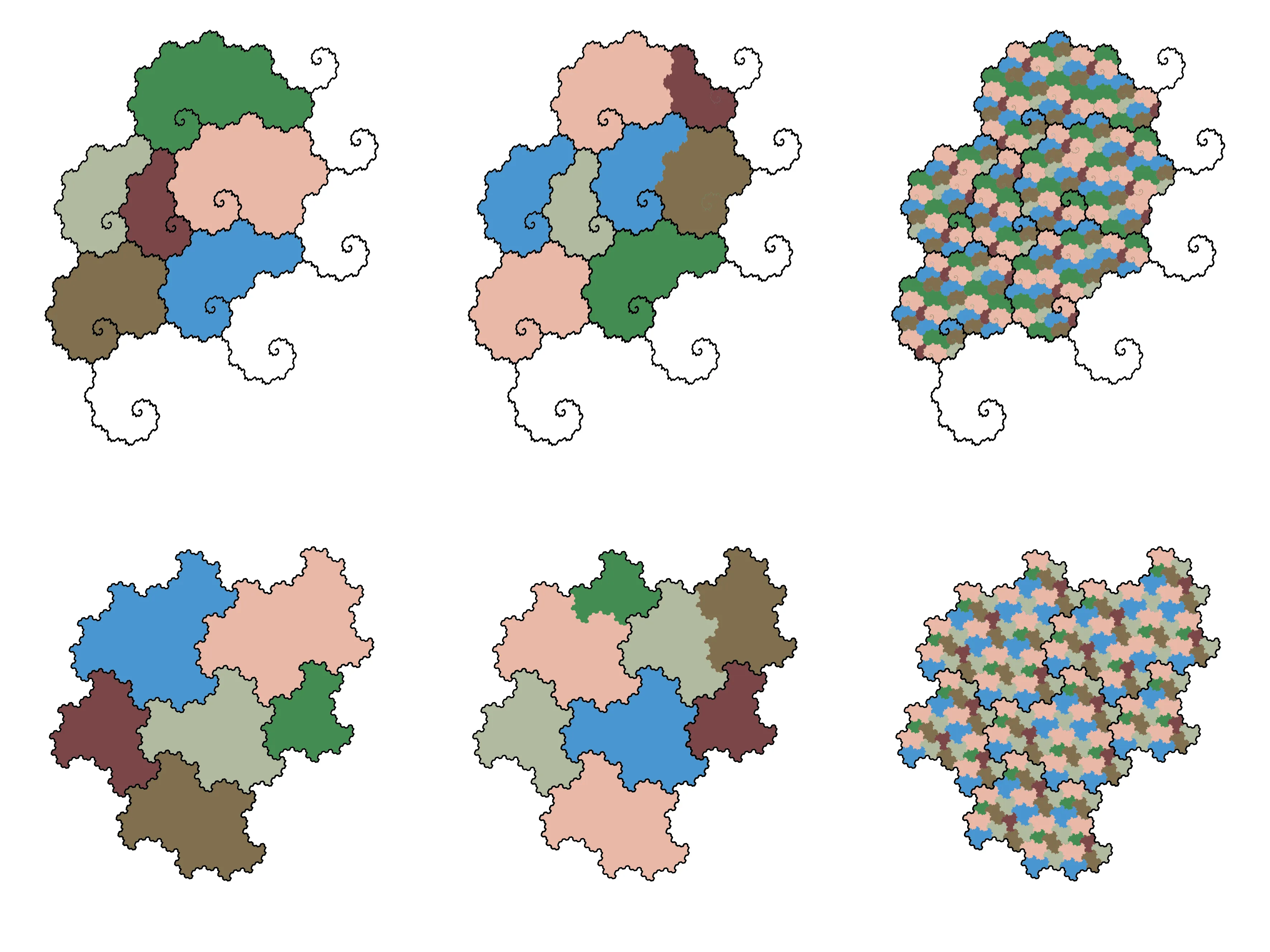
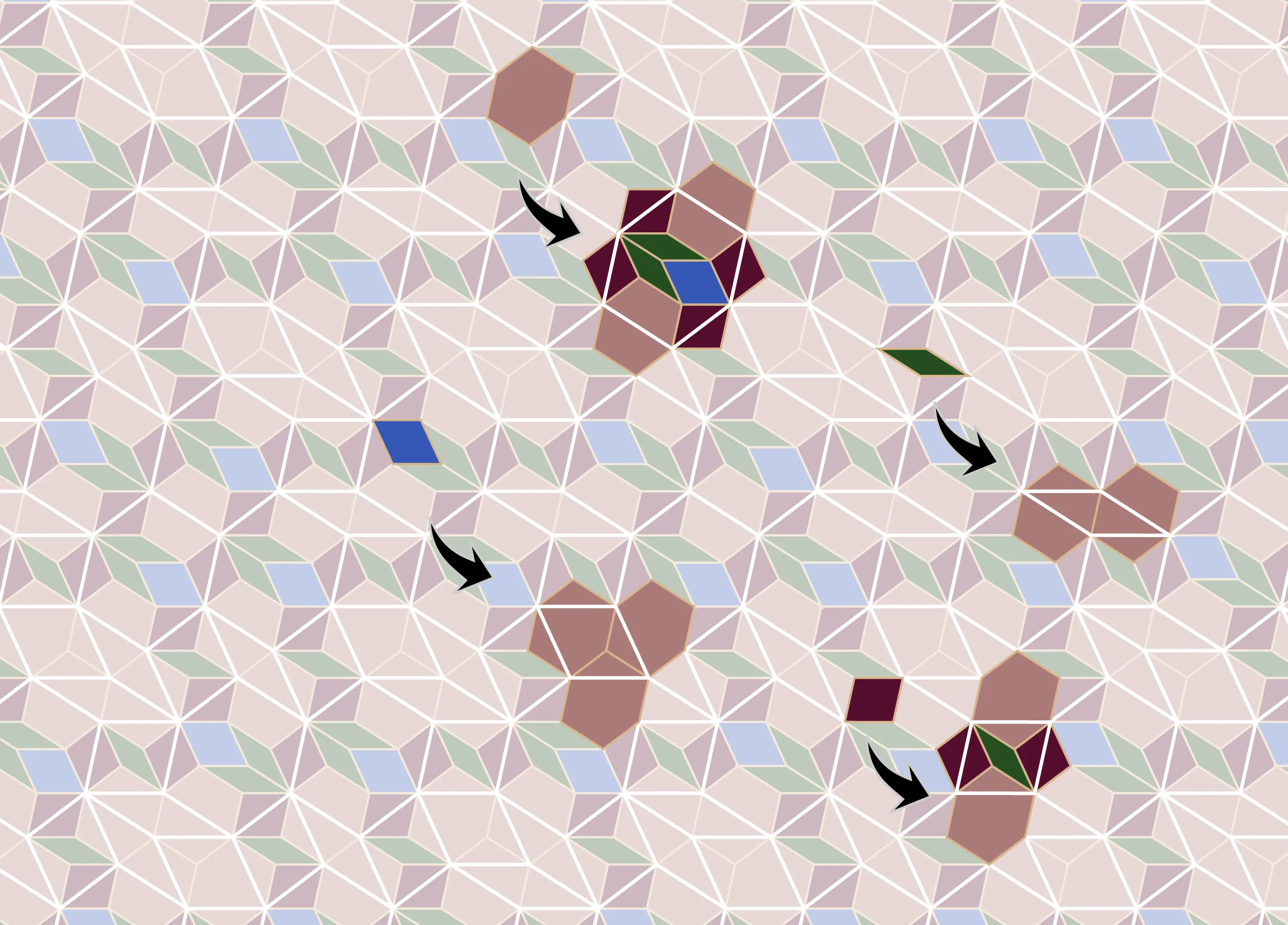
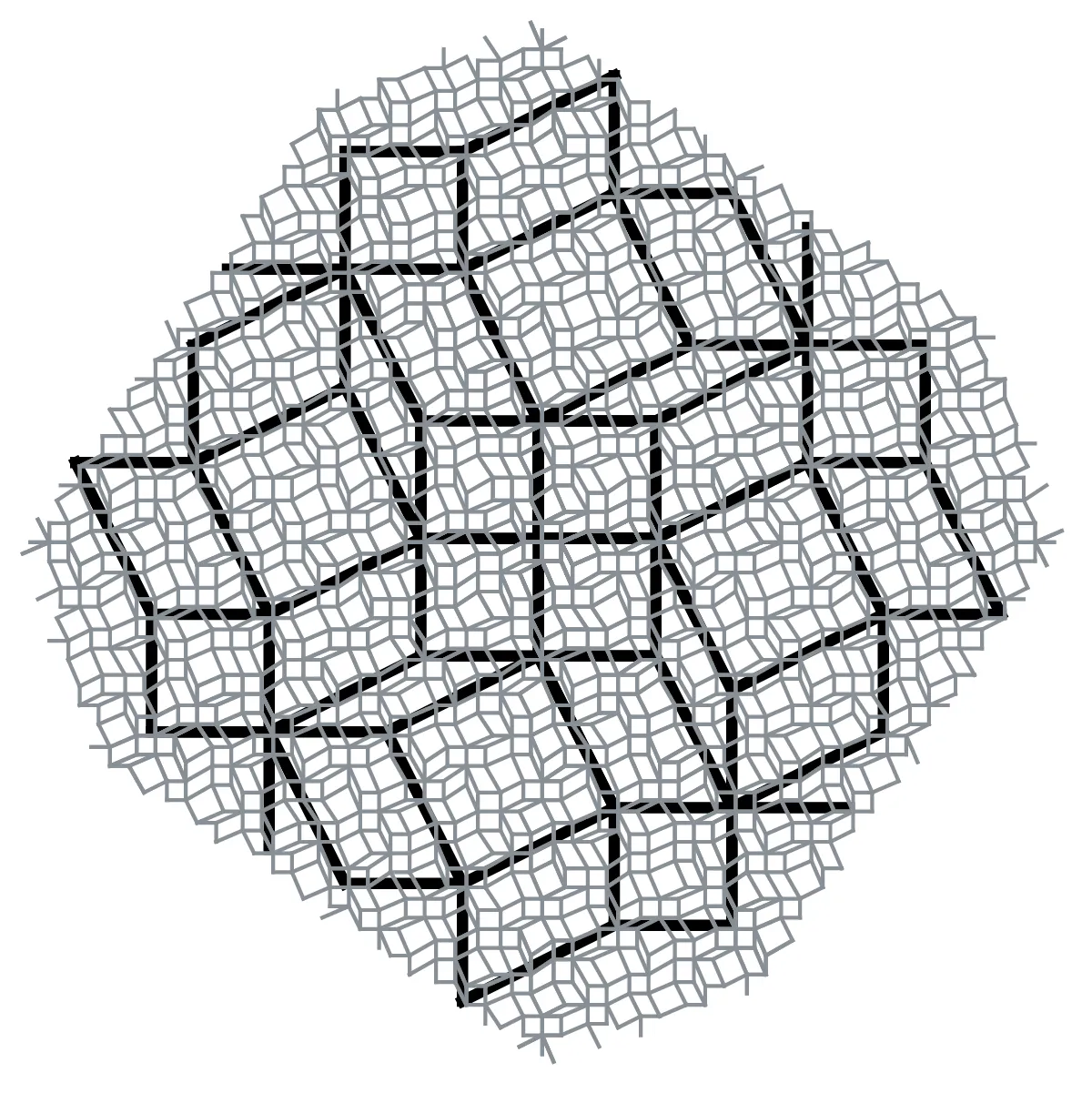
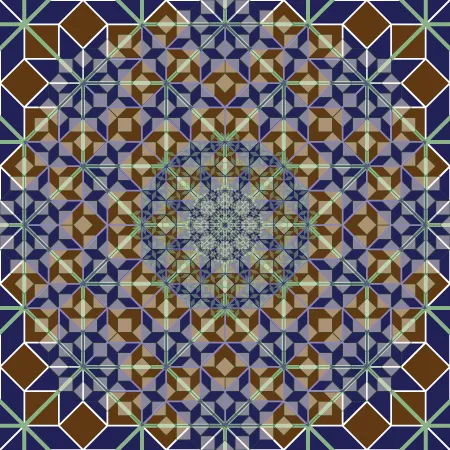
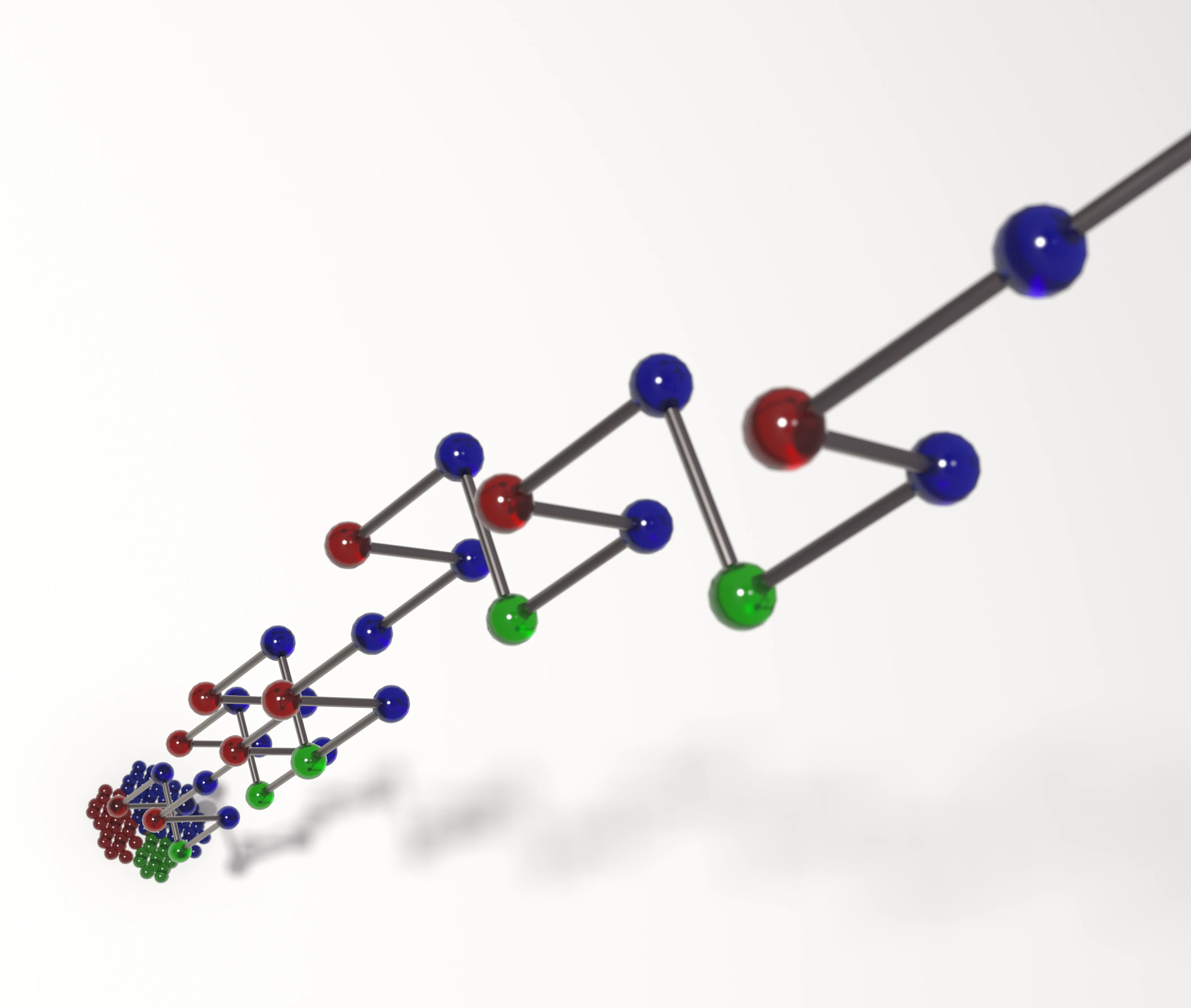
There are two common ways to build ordered non-periodic tilings, patterns that fill space without ever repeating. The first is by substitution rules: inflate a patch of tiles and replace each inflated tile by a prescribed cluster of smaller tiles. Iterate, and the rule generates a tiling of the whole plane. The second is the projection method: slice an irrational strip through a higher-dimensional integer lattice and project the lattice points inside that strip down to a lower-dimensional space. The result is a point set (or tiling) with no translational period but with the deep regularity inherited from the lattice.
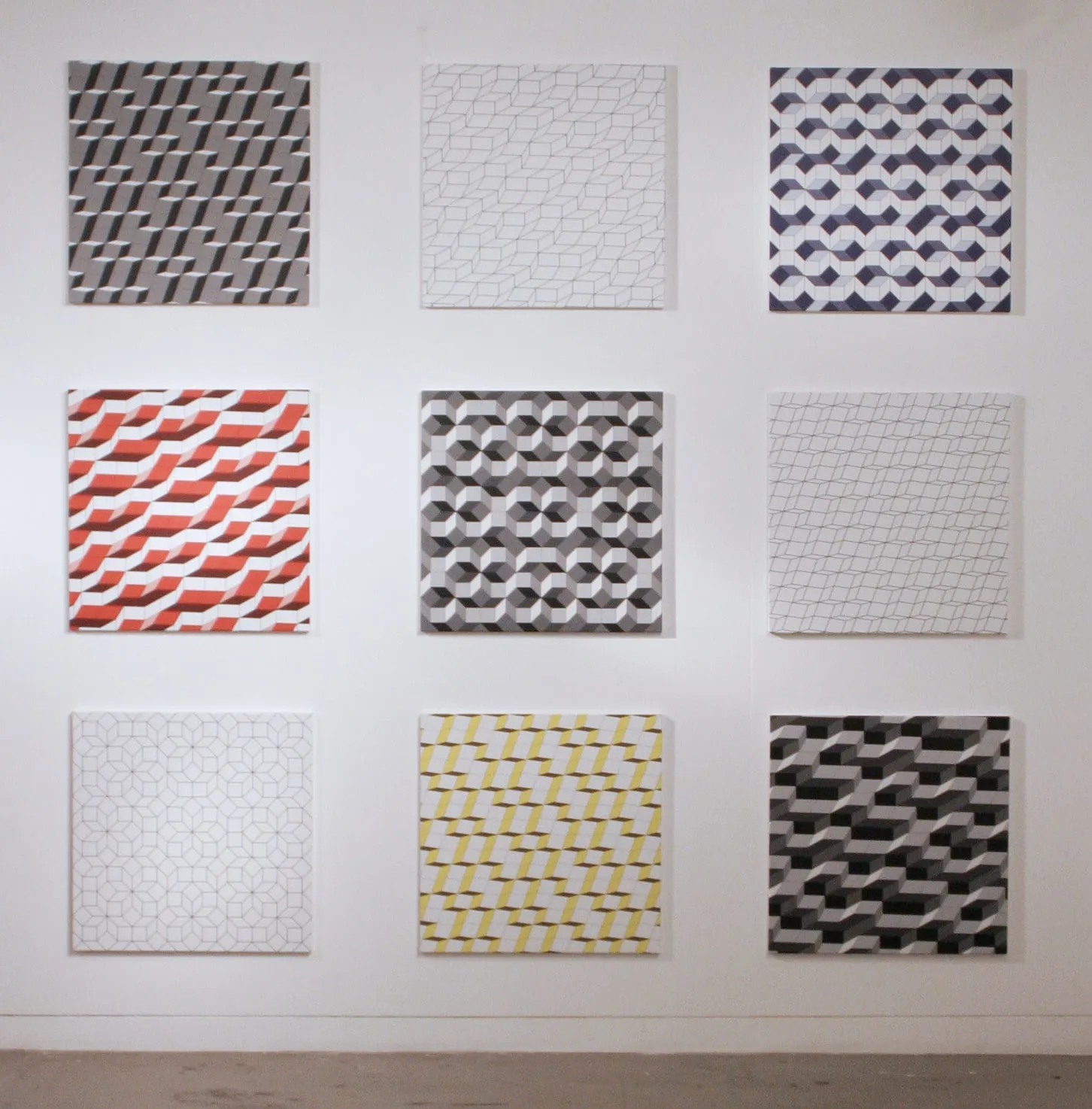
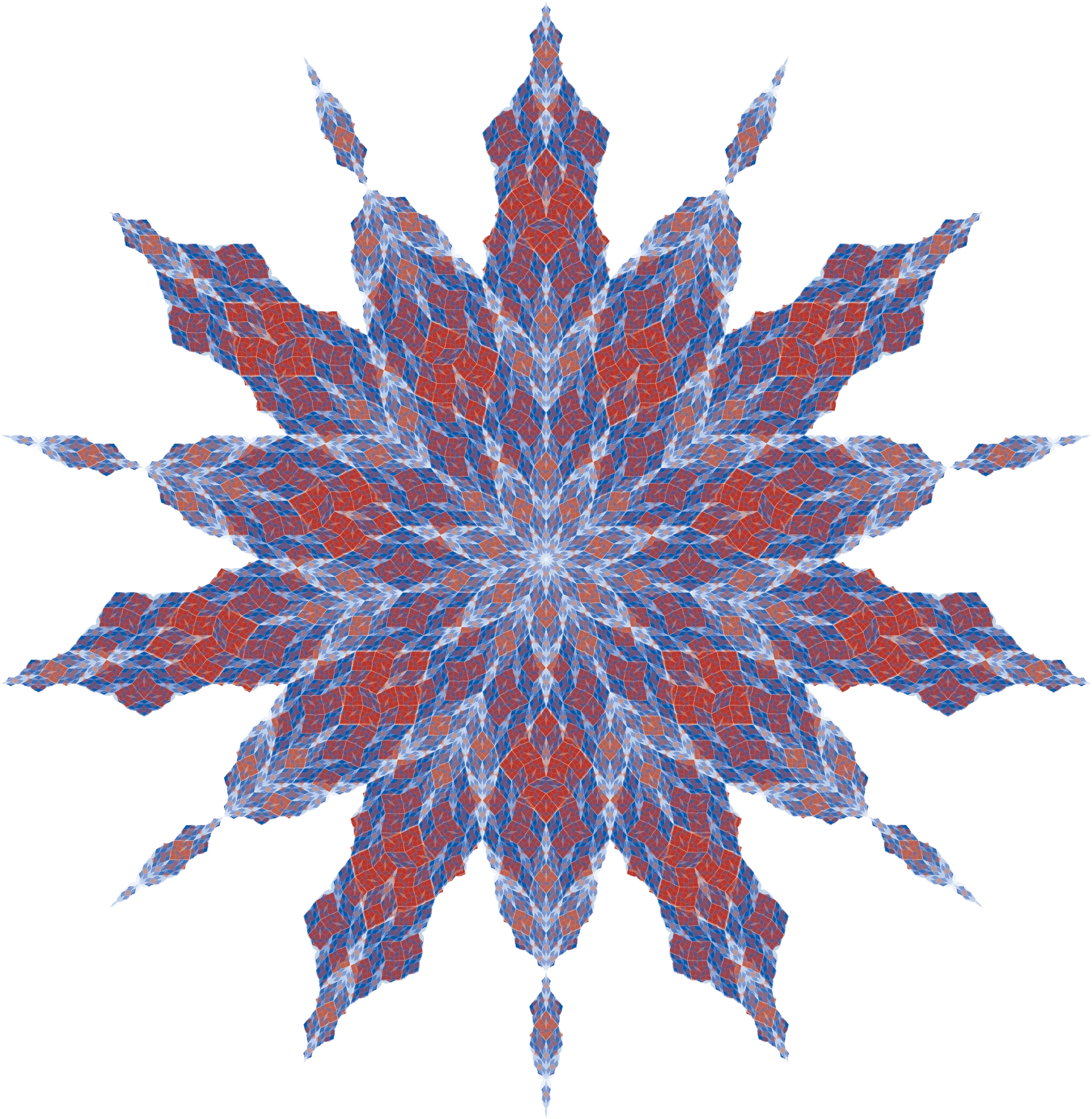
The Penrose tiling has both descriptions. So does the Ammann–Beenker tiling. The Rauzy fractal makes the connection explicit for a family of one-dimensional substitutions. The central question running through this research programme is: exactly when does a cut and project set also admit a substitution rule, what does that substitution look like and what does the window look like?
Research arc
This line of work began in my PhD thesis (2004, with Jeroen Lamb at Imperial College), which posed the question and worked out the first results. The accompanying journal paper in Theoretical Computer Science fully characterised all canonical projection tilings of Ammann–Beenker type: parallelogram tilings that can be cut from ℝ⁴ to the plane and that also admit substitution rules. A striking finding was that each such tiling carries not one substitution but a countably infinite family of inequivalent substitution rules.
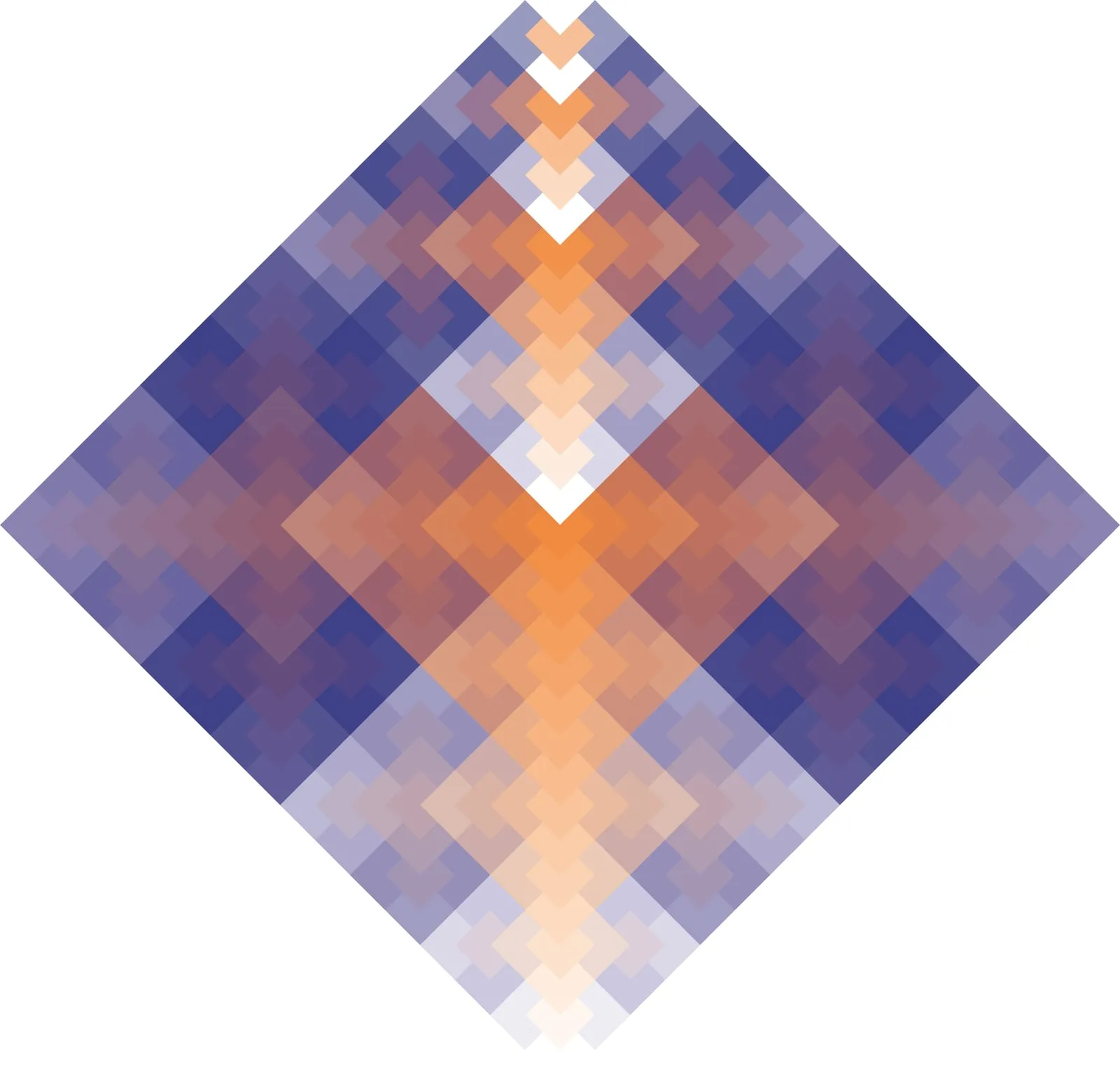
Later work with Pierre Arnoux, Shunji Ito and Maki Furukado extended this framework beyond the Pisot case to non-Pisot hyperbolic substitutions, connecting free group automorphisms to planar tilings via the same algebraic structure. The Rauzy fractal expository piece with Arnoux in the Notices of the AMS gives an accessible entry point to the window constructions that underpin all of this.
A current preprint (with Henna Koivusalo and James Walton) closes the main open question by giving a complete characterisation for arbitrary cut and project sets in Euclidean space.
The key move is to work up to Mutual Local Derivability (MLD) the equivalence relation where two patterns are each derivable from the other by local rules. This turns the combinatorics of tracking substitution rules into a distance that gives the required information. It blurs out some features of tilings, but allows the existence of hierarchy and constraints on that to be established.
The main theorem: a cut and project set is substitutional if and only if there is a linear automorphism of the total space that preserves the lattice and both subspaces, and under which the window is constructable: expressible from finitely many set operations on translated, scaled copies of itself. For polytopal windows this reduces to a checkable condition on supporting hyperplanes and vertices.